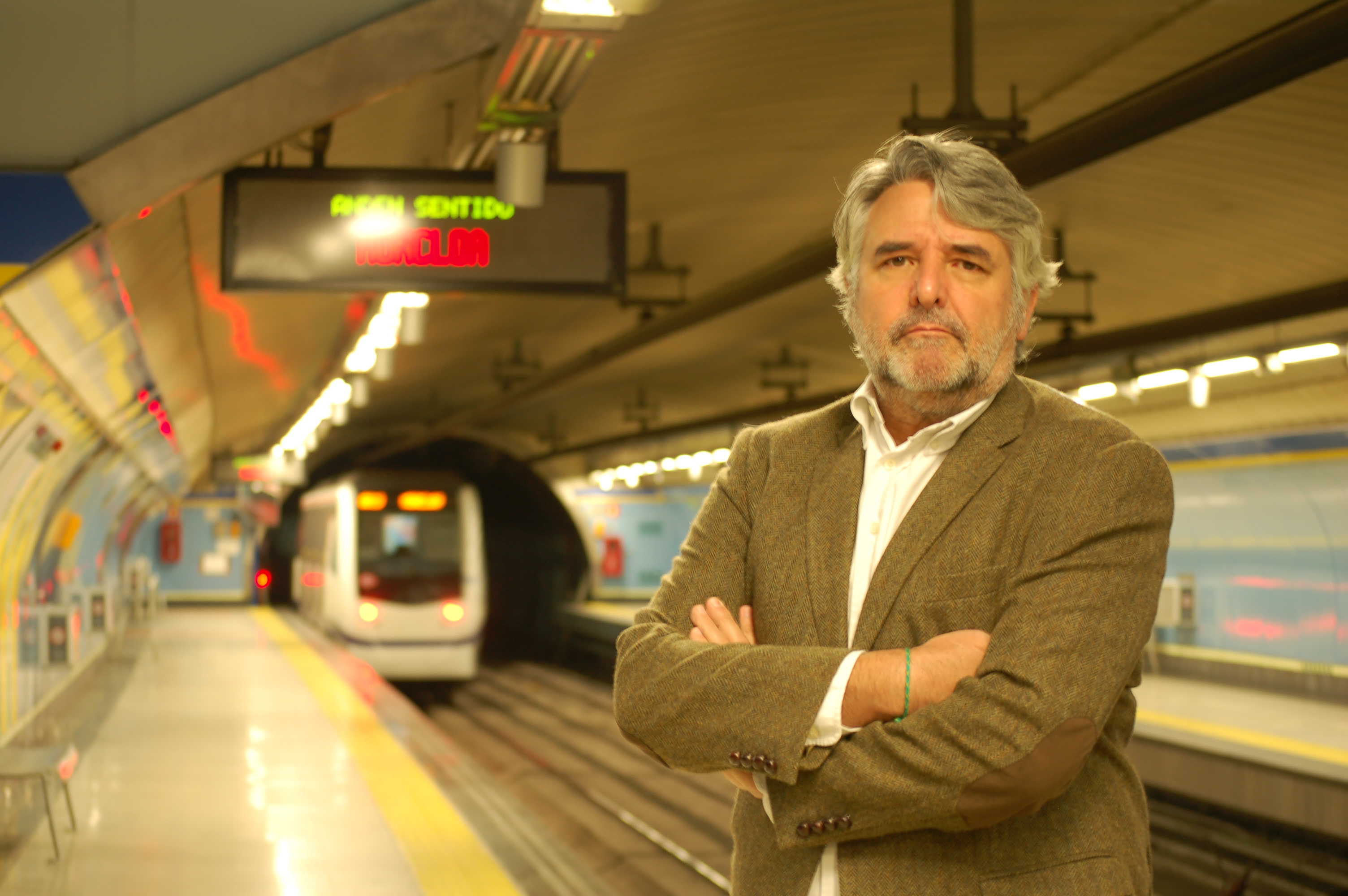
“It is necessary to implement policies that change the way we move within cities so that they are more environmentally and economically sustainable”. This is how the general secretary of Atuc expresses himself in this interview granted to our blog, in which he assesses the challenges and objectives that urban collective transport must face in our country. For Herrero, furthermore, the bodywork industry is a fundamental pillar for the urban transport sector in cities. In this regard, he considers that our company, Grupo Castrosua, shows great “professionalism” and “vitality”

1.- What is Atuc? Who makes up this association and what are its objectives?
Atuc is the association that brings together the urban collective transport service operators in Spain. Our members, public and private, provide their services in urban and metropolitan areas, and all existing modes of collective transport in our country are represented in our association: bus, metro, tram, and railway.
The majority of companies providing urban collective transport services are integrated into Atuc. More than 95% of the journeys made in Spain are offered by our members. Among the most important members are EMT and Metro de Madrid, TMB of Barcelona, EMT and Metro de Valencia, Tussam of Seville, and EMT of Malaga. Major business groups such as Avanza, Alsa, Ruiz, Vectalia, and Moventia are also represented. The main metropolitan railway companies, such as Metrovalencia or Metro Bilbao, are also part of Atuc.
The objectives of our association are the defense of the interests of the integrated companies, the dissemination of knowledge among its members, and, of course, the promotion of public transport.
2.- What is the overview of urban transport in Spain compared to other countries in the region?
In our opinion, and in general terms, the quality of urban collective transport in Spain is very high. Both in terms of operators and suppliers, we have first-class companies. Evidence of this is their international presence, which is constantly growing.
Another important issue is the perception that the average Spaniard may have of urban collective transport and, above all, the need for a change in the prevailing mobility model in our country, where, in our opinion, the car still plays an excessive role.
3.- What do you consider to be the most effective policies for promoting the use of public transport?
On the one hand, it is necessary to implement policies that change the way we move within cities so that they are more environmentally and economically sustainable. Citizens must be placed at the center of the mobility model, which necessarily implies the establishment of measures that promote responsible transport modes, measures that discourage the massive use of private vehicles, such as residential priority areas or regulated parking zones.
On the other hand, in the field of operators and mobility authorities, it is essential to continue making urban collective transport a real alternative to citizens’ needs, without forgetting that the more competitive it is, the more acceptance it will have. In this regard, commercial speed is a fundamental variable, and measures to prioritize public transport, such as traffic light priority, are necessary.
4.- In your opinion, what are the main challenges facing the Spanish urban transport sector?
It is clear that the current mobility model is unsustainable and that the solutions that are emerging (cycling, car-sharing in its various forms, on-demand transport, etc.) must be led by fast, efficient collective transport that is very close to the needs of citizens.
5.- What weight does the bodywork industry have in ATUC?
Atuc brings together urban collective transport operators, therefore, the relationship with the bodywork industry is that of a supplier to some of our members: the bus fleet operators.
The bodywork industry is very important for the members of our association, who are operators of urban collective transport fleets, as they supply the basic tool for carrying out the service entrusted to them. It is inside the bus where the interaction between all the efforts made by the company and the needs of the client takes place. The exterior is also a fundamental part of the image that the company presents to the city. Therefore, the bodywork industry and its services are fundamental for our member companies.
6.- How does Atuc assess the trajectory of Grupo Castrosua as a company?
The Spanish bodywork industry, as is well known, has always had and continues to have great importance in the sector, highlighting traditional quality along with versatility and attention to the specific needs of each client. Without a doubt, Castrosua is the best example of the above. Atuc greatly appreciates and values the professionalism and vitality shown by the company. Proof of this is the new Vectia project, for which we all wish it a great future.
We thank Jesús for his collaboration in carrying out this interview. It has been a pleasure!