
It will soon be five years since the world met Greta Thunberg, the young woman who became a global icon of the climate movement. Born in Stockholm in 2003, Thunberg attracted media attention on August 20, 2018, when she decided to go on strike and not attend school until after the Swedish general elections, which were to be held on September 9.
Following an unprecedented heatwave and forest fires in the Scandinavian country, the teenager wanted to draw attention to climate change with this gesture and demanded that the future Swedish government reduce carbon emissions in accordance with the guidelines of the Paris Agreement. For this reason, she initiated the “School Strike for Climate” movement, which was subsequently supported worldwide and established Greta as the world’s most famous face in the fight against climate change.
She was received by heads of state from various countries around the world, including former German Chancellor Angela Merkel, and actively participated in the UN Climate Action Summit held in New York in September 2019, after crossing the Atlantic by boat. There, she drew the world’s attention by stating that political leaders are “failing” an entire generation by not doing enough to combat climate change.
Journey to Sustainability
Although over the years Greta reduced her public appearances and media exposure, her message remains very much alive. Recently, a few months ago, she spoke again about the importance of acting and reducing our footprint on the planet through a series of recommendations aimed at promoting a more sustainable tourism model. The journey towards sustainability has already begun, and to achieve it, Greta Thunberg strongly recommends “traveling better.”
In her opinion, tourists should opt for more ecological modes of transport for their journeys, choose electric options, and use public transport. Trains, trams, and ferries, and particularly buses, are the preferred options that Greta recommends, and she urges authorities to promote their use as a way to offer low-carbon logistics.
It is undeniable that increased use of public transport would help reduce the pollution produced by the massive use of private vehicles, especially in large cities. Traveling by bus, as Greta Thunberg points out, is an ideal option for moving forward on the path to sustainability.
And if, in addition, the buses we travel on take environmental commitment into account, the goal will be doubly achieved. Urban electromobility is a good example of this trend. Committing to it will help achieve the sustainable tourism and transport model that Greta desires.
Electromobility at Castrosua
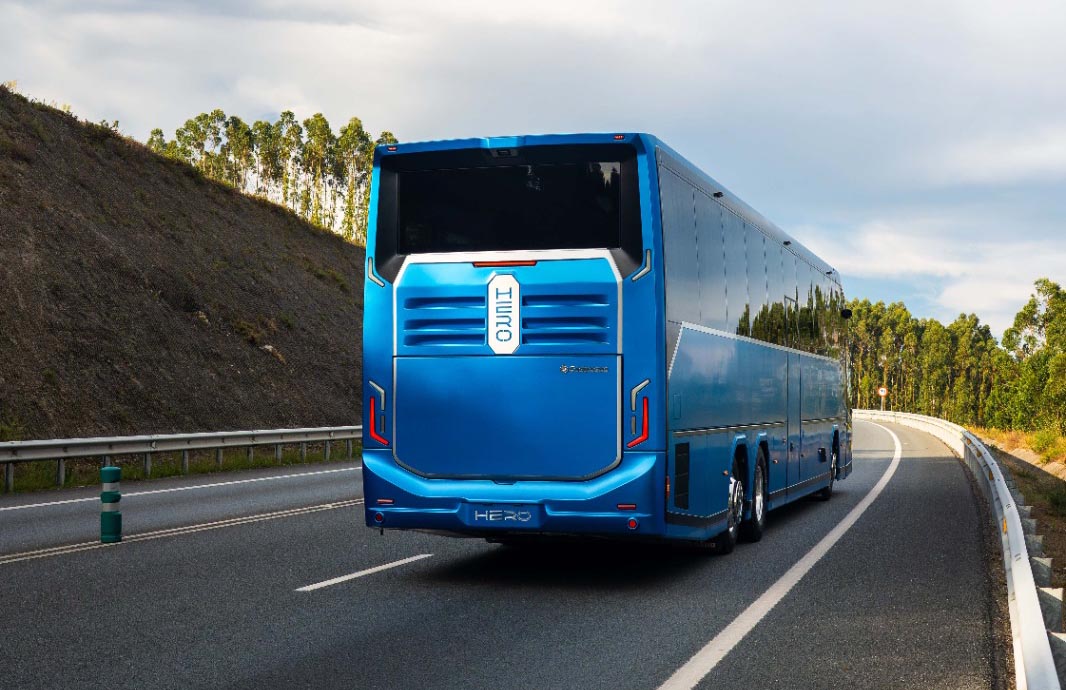
In this regard, many companies have set to work and have committed to being at the forefront of electromobility. In our case, at Grupo Castrosua, our environmental commitment, aligned with our clients’ demands, encouraged us over four years ago to develop the first highly customizable body for electric chassis.
A body that is now a reality and is called Nelec (New Electric Castrosua). This model represents our contribution to the sustainable transport market. It is Castrosua’s first body on an electric chassis for urban transport.

Other Keys to Reducing Environmental Impact When Traveling
Greta’s recommendations are supported by data such as those provided by the DGT: in terms of CO2, a car and airplane passenger pollutes 2.4 times more than a bus passenger per traveler and kilometer traveled.
In this regard, the bus is, after the train, the land transport mode with the lowest CO2 emissions and, of all collective transport modes, the one that generates the least greenhouse gases, being 3.7 times less polluting than the airplane, 5.5 times less than the car, and 13% less than the train.
However, the Swedish activist’s recommendations for achieving a more sustainable tourism model are not limited to simply promoting the use of public transport or encouraging industry to embrace electromobility. Fostering eco-friendly travel, according to Greta, must also take into account a series of keys, and among them, she considers the most important to be promoting education about the climate crisis.

This was stated by the young Swede during the global presentation of the book The Climate Book, a compendium of essays, scientifically backed data, and opinion pieces from leading experts who have focused their research on studying the effects of climate change.
In addition to education, Greta Thunberg has called for “understanding the science” because she believes that the “sustainability crisis” occurs because certain information does not reach people. Global warming is due to excess emissions generated by humans, emissions that fuel the greenhouse effect and besiege the oceans, causing unprecedented extreme weather phenomena. Greta believes that tourism is highly vulnerable to climate change, while also contributing to it, and therefore, it is necessary to understand the science to avoid, as much as possible, individual actions that worsen the situation.

Fighting Plastic Addiction
Along with this, Greta Thunberg encourages fighting what she calls an “addiction” to plastic and ending disposability, advocating for the use of more durable products and promoting the circular economy. She also advocates for promoting the restoration of forests, wetlands, savannas, reefs, and other depleted ecosystems by choosing activities that contribute to the regeneration of life on Earth.
Given that climate change is accelerating species loss, Greta also calls for embracing biodiversity and for tourists to pay for trips and activities that generate income for wildlife conservation.

Warning About Greenwashing
Being more conscious and considerate consumers is another key premise for the young Swede, as our consumption decisions can help reduce negative ecological impact. Finally, Greta warns about hollow promises and so-called “greenwashing,” stating that false claims about sustainability can lead to a worsening of the situation.
What do you think about the Swedish activist’s recommendations for promoting a more sustainable tourism model?
Would you add any proposals to her list?