
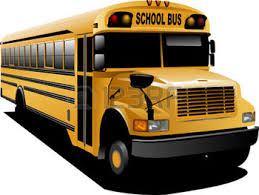
Different American bus manufacturing companies, such as Wayne Works, were pioneers in the development of school transport vehicles at the beginning of the 20th century. However, among them all, Blue Bird Body Company stands out, which will go down in history as the creator of the most iconic model in this field.
The history of Blue Bird (BB) begins when Albert Luce built, in 1927, the Blue Bird # 1, one of the first school buses to use steel in its construction. A new paradigm was thus established in the school transport industry.
A few years later, in 1935, the first plant dedicated entirely to the development of school buses by Blue Bird Body Company was established in the American state of Georgia.
The yellow color
The use of yellow for USA school buses was decided later. It was at a conference organized in 1939 at Teachers College, Columbia University.
Vehicle manufacturers, paint company representatives, and transportation officials met there to set standards for the manufacturing of models intended for school transport.
It was considered that yellow was more easily visible in low-light conditions, such as dawn or dusk, and that its use contributed to improving road safety.
Later, the US Government developed new safety regulations for these models that standardized, among other things, the height of vehicles or seats, sheet metal thickness, and impact resistance.
International Manufacturer
Blue Bird became an international manufacturer of school buses with the launch of Blue Bird Canada in 1958. Seven years later, the company opened a plant in Guatemala, which remained operational until 1982.
Blue Bird Corporation (BB) came to have five factories where it developed models for urban, suburban, school, commercial, and recreational use.
Currently, of the five BB plants located in the United States, only the one in Forth Valley, Georgia, remains in operation. In October 2009, BB formed a joint venture with the Canadian school bus manufacturer Girardin Minibus under the name Micro Bird, Inc.