
The Galician Technological Centre for Automotive (CTAG), a close collaborator of Castrosua, has been offering advanced technological solutions to the automotive sector since 2002. This organization, currently focused on intelligent, sustainable, connected, and autonomous mobility, participated in an earlier phase of the design of Nelec, our first electric bus.
At Castrosua, we have had the pleasure of interviewing its director, Luis Moreno, with whom we discussed CTAG’s current projects and challenges, shared experiences between Castrosua and CTAG, and the future of the bus sector.
How would you explain CTAG’s work to someone who doesn’t know you?
The Galician Technological Centre for Automotive offers advanced technological solutions to the automotive sector. We are involved in the entire product-process development cycle, from the initial stages of advanced research to validation. We focus our R&D&I activities primarily on Industry 4.0 processes, new materials, electric vehicles, and advanced comfort, among others. We are currently positioned as a leading European centre for autonomous and connected vehicles.
What can you tell us about your history? Any projects to highlight?
CTAG was founded in 2002. It was a very exciting project that aimed to boost R&D and the competitiveness of Galicia’s strong and pioneering automotive sector. CTAG became the technological partner of the Vigo Centre of Groupe PSA – now Stellantis – and the automotive component industry under the CEAGA umbrella. Over these almost 20 years, we have carried out many projects, and it’s difficult to choose just one. Due to its scale, we could highlight the commitment to creating a division specializing in electronics and intelligent transport systems in 2005, with its subsequent expansion with the first tracks in 2014.
What projects is CTAG currently involved in?
We have initiated the creation of a new artificial intelligence laboratory, essential for offering autonomous driving and driver-assistance functions, which will also enable the development of methods to ensure vehicle cybersecurity.
We will also promote a focus on new, more environmentally sustainable propulsion systems, with new laboratories and equipment adapted for the development, testing, and validation of electric vehicles and their components and energy storage systems.

Is manufacturing lighter bodywork important for advancing sustainable mobility, right?
Yes. It is very important. Manufacturers are increasingly aware of the need to reduce consumption and harmful emissions into the atmosphere.
What are the advantages of the eco-driving system that CTAG has heavily invested in?
Eco-driving helps reduce fuel consumption and CO2 emissions into the environment. It also improves driving safety. With this type of driving, we can achieve average fuel savings of around 10% and a similar reduction in CO2 emissions.
So, sustainable mobility is a priority for CTAG.
The shift towards new, environmentally sustainable propulsion systems that we have seen in recent years is evident, and CTAG is progressively investing in specific equipment for the development and validation of electric cars.
CTAG has committed to creating a laboratory for electric vehicle validation, through which we aim to address the challenges posed by powertrains with different energy storage technologies.
“We want to lead intelligent, sustainable, connected, and autonomous mobility from Galicia”
How would you say the bus sector has evolved in the last ten years?
The bus sector has evolved exponentially in recent years, successfully adapting to user needs and the priority challenges of urban and sustainable mobility. Buses are a key mode of transport for meeting the mobility demands of various groups, and they are making giant strides in digitalization through the development of big data, mobile applications, and innovation in onboard entertainment systems. Environmental concern is another firm commitment of the sector. The development of electric models like Castrosua’s Nelec highlights the importance of working in this area and points the way forward.
In your opinion, what are the main challenges facing the automotive sector today?
Without a doubt, the main challenges facing the sector are related to the new paradigms of digitalization, ecological transition, and the mobility of the future. At CTAG, we are participating in defining a project for the entire Galician sector with the aim of securing European funds. We believe it is essential to leverage them. We want to lead the transformation required by the next intelligent, sustainable, connected, and autonomous mobility from Galicia. The AutoAncora project, in which CTAG is involved, is an R&D&I project that will focus on establishing two major research laboratories to promote hydrogen and electric engines and advance in new mobility through intelligent autonomous vehicles.
What new opportunities do artificial intelligence and big data offer in the automotive sector, and more specifically, in the bus sector?
Processing the vast amount of information from vehicle sensors and data sources is key to offering autonomous driving and driver-assistance functions. Furthermore, the development and validation of artificial intelligence algorithms are essential. This also includes expanding capabilities in connectivity. Vehicles increasingly have more functions connected to other users, road infrastructure, cloud services, etc. For this, the use of communication technologies like 5G networks is essential. In this field, the development of methods to ensure vehicle cybersecurity is of particular importance.
In the specific case of buses, CTAG contributes its innovation and development capacity, along with our experience in urban mobility projects, to incorporate the technological solutions that will shape the mobility of the future into our environment.

And what types of technologies are most important for achieving the goal of zero accidents?
In our Electronics and ITS division, we work on the development of intelligent driving systems that help prevent potential collisions. In this regard, we have presented several projects, such as an intelligent driving system that takes control of the vehicle if the driver does not react to a potential obstacle on the road, reducing speed and even changing the car’s trajectory to avoid a collision. This device can detect the presence of an obstacle on the road and warn the driver of the danger. Another project we have developed in this area is TSR, which allows the vehicle to recognize traffic signs and even warns the driver if they are not complying with the rules. We have also collaborated with the General Directorate of Traffic in developing systems that can prevent dangerous situations on the road, such as accidents, roadworks, or adverse weather conditions (rain).
We recently participated in the launch of Spain’s first tunnel connected to vehicles, integrating our developments in cooperative systems into prototype vehicles and carrying out validation and fine-tuning tests, with the aim of moving towards intelligent roads that communicate with connected vehicles and offer greater driving assistance.
Since we are talking about safety, what advancements have been made in comprehensive safety systems for urban and interurban buses?
These systems have helped provide users with greater safety during their journeys and have considerably reduced the frequency and severity of accidents involving buses, such as accidents and injuries associated with falls by standing passengers, as well as pedestrian accidents in loading and unloading areas, among others.
Would you venture to say which development will decisively change the automotive and mobility sector in the coming years?
As I mentioned, the transport of the future will address current mobility challenges: it will be safer, smarter, more sustainable, connected, and autonomous. As a technology centre specializing in the automotive and transport sector, electric mobility is a priority for us. Our interest in this area focuses on consolidating a Laboratory for the Integration of Clean Propulsion Technologies in Vehicles.
With the installation of battery modules in hybrid buses, do you consider that the sector is already undergoing a transition towards electric mobility?
Absolutely. Electrification is one of the sector’s main commitments. At CTAG, we expect our Laboratory for the Integration of Clean Propulsion Technologies in Vehicles to become a true centre of expertise, covering knowledge and activities at all levels, and where electric batteries can be addressed. This laboratory will allow simultaneous simulation of the electrical, thermal, climatic, and vibratory conditions to which subsystems and the electric or fuel cell vehicle itself may be subjected.
We believe this initiative is a great opportunity for CTAG, as it will allow us to strengthen our technical and human capabilities in batteries and, in general, in new technologies for the vehicles of the future, which will be environmentally sustainable vehicles.

“We are very satisfied to have collaborated in part of the design of Castrosua’s Nelec”
CTAG and Castrosua are united by years of collaboration and joint work, what would you highlight about this alliance?
Throughout these years of collaboration with Castrosua, I would highlight the company’s commitment to being at the forefront of developing innovative solutions for the sector. It has been enriching to work together on projects focused on advanced driver workstations or vehicle perimeter vision systems. We have recently collaborated in some phases of the design of the Nelec electric bus and hope to continue collaborating with Castrosua in developing systems that promote future mobility in the bus sector.
CTAG’s role was important in the development of Nelec. Are you satisfied with the result?
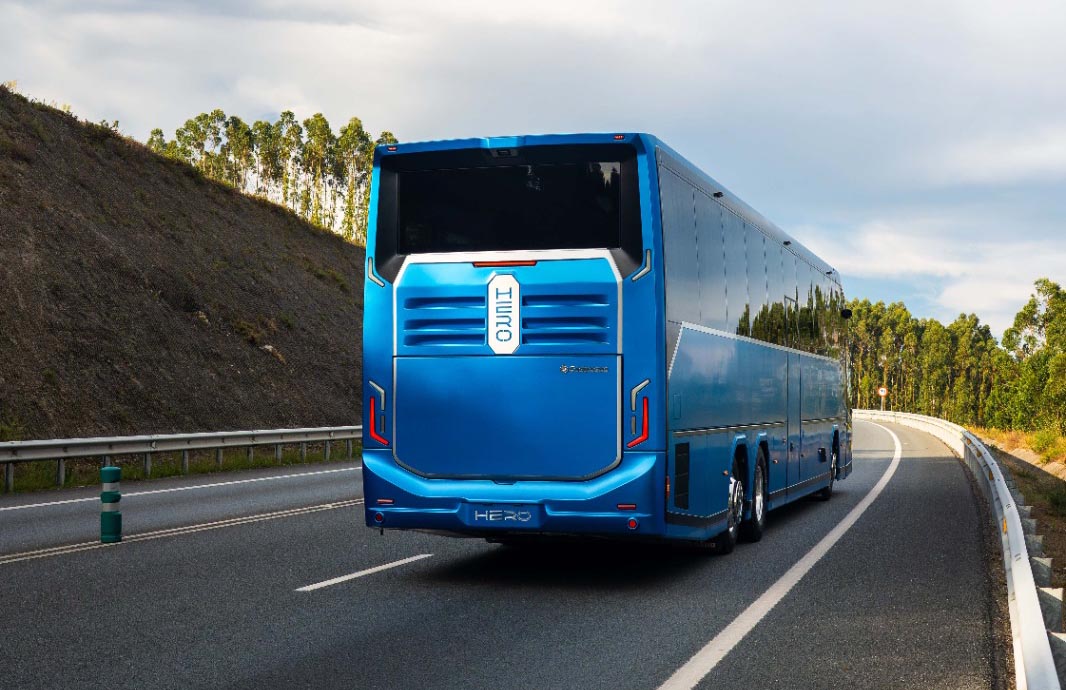
At CTAG, we are very satisfied to have been able to collaborate in the design of this innovative electric model that champions urban mobility. Our design and HMI (Human Machine Interface) team from the Electronics and Intelligent Systems Division, specializing in defining interior and exterior styling for cars, industrial vehicles, and special vehicles, collaborated with Grupo Castrosua in an initial phase on the conceptual design of the vehicle’s exterior line and the conceptual design of the driver’s workstation and interior lighting area of the new electric bus concept. In the second phase, CTAG carried out the 3D development for the industrialization of the vehicle’s exterior (only the front and rear of the bus).
How did you feel about the Nelec bodywork winning the Red Dot Award?
We are very grateful to Grupo Castrosua for giving us the opportunity to participate in the design of Nelec and we are proud of the international success and recognition this model has achieved.
After this interview, at Castrosua, we have an even clearer understanding of CTAG’s importance in the automotive sector; their work and commitment are key to shaping new sustainable mobility solutions, which must include intelligent and innovative collective transport that responds to the needs of both the environment and citizens.
Many thanks to Luis Moreno, director of CTAG, for his dedication and time. The alliance between Castrosua and CTAG continues.