
November 21 is the World Day of Remembrance for Road Traffic Victims, a date on which we not only remember all those who have died or been seriously injured on the roads, but also insist on promoting evidence-based actions to prevent more deaths or injuries from accidents and advocate for better support for victims and their families.
What has been the trend in accident rates in recent years? Does public transport help reduce road traffic accidents? How can we achieve the goal of zero victims on the road according to the European Union? We provide some information in this post.
Historic low in fatalities in 2020
2020 was a year marked by lockdown to curb the spread of COVID-19. This reduction in mobility is reflected in the road accident data shared by the General Directorate of Traffic (DGT). Last year, 72,959 traffic accidents with victims occurred in Spain, compared to 104,080 registered in 2019. 26,643 of these accidents occurred on interurban roads and 46,316 on urban roads.
In terms of the number of deaths from traffic accidents, in 2020 we reached a historic low of 1,370 fatalities, 385 fewer than in 2019. Of these 1,370 deaths, 975 occurred in accidents on interurban roads, while 395 occurred in accidents on urban roads.
Furthermore, of the total fatalities in 2020, 684 were part of the so-called vulnerable group (pedestrians, cyclists, VMPs, mopeds, or motorcycles), and 544 were car occupants. Only three of the fatalities were on buses (the same as in 2019).
According to the DGT report on road accident rates in 2020, most fatal accidents were caused by run-off-road incidents, collisions, and pedestrian hit-and-runs. Distractions were the most frequent contributing factor in fatal accidents (present in 31% of them), followed by alcohol consumption (present in 27%) and speed (present in 25%).
Looking back in time, we observe that the number of fatalities on interurban roads in 2020 (975) is 50% lower than in 2010 (1928). However, the decrease is not as significant for accidents on urban roads; the number of fatalities on these roads in 2020 (395) is only 28% lower than the 550 registered in 2010.

First road accident data for 2021
Regarding the current year, the DGT has so far only shared road accident data recorded on interurban roads during Easter week and the summer months (July and August).
There were 32 road deaths during Easter week, 20 more than in Easter week 2020 and 5 more than in Easter week 2019. In contrast, summer 2021 ended with the lowest number of fatalities on interurban roads in the historical series, a 5% reduction in fatalities compared to summer 2020 and an 11% reduction compared to summer 2019. During July 2021, there were 99 fatalities; in August 2021, there were 92.
Although DGT graphs since records began show a downward trend in the number of accidents with victims occurring year after year on the roads, there are still too many. What measures are our institutions and authorities proposing to reduce road accident victims?
The European Union’s vision of zero road accident victims
The European Parliament approved a report with updated road safety policies and measures a few weeks ago to move towards the ‘vision zero’ objective (zero deaths and zero serious injuries on the roads).
As the EU recently stated, around 22,700 people lose their lives on European roads each year, and 120,000 are seriously injured. The European Parliament has set a long-term goal of zero deaths and zero serious injuries on European Union roads by 2050 and a medium-term goal of reducing the number of deaths and serious injuries by 30% by 2030.
To this end, MEPs believe it is necessary to reflect on issues such as vehicle automation (which can pose a new risk to pedestrians, cyclists, or motorcyclists), driver distractions caused by the use of mobile devices, and the need to transform urban mobility towards active lifestyles with walking, cycling, or sustainable public transport to reduce the level of danger on the roads and reduce CO2 emissions.

This new report with road safety measures emphasizes the following points:
- Infrastructure: During the pandemic, European citizens walked more and cycled more, highlighting the need to improve infrastructure for pedestrians and cyclists. The report recently approved by the European Parliament advocates for increased spending on quality, permanent, and safe infrastructure for cyclists and pedestrians.
- Automation: Parliament demands a new regulatory framework for automated vehicles to ensure they operate safely, particularly regarding their interaction with conventional vehicles and vulnerable road users. MEPs also want driving assistance systems to be evaluated due to the excessive reliance they generate and the distractions they can cause.
- Driving under the influence of alcohol and drugs: This report calls for an update to the current recommendation on blood alcohol concentration limits for drivers, moving towards zero tolerance. The same applies to drugs.
- Speeding: A set of recommended speed limits should be proposed to encourage member states to apply the safest limits for different types of roads.
These objectives and goals must be supported by a coordinated, well-planned, adequately funded approach shared by all relevant stakeholders and authorities at the EU, national, regional, and local levels.
Road safety education in schools
Of course, it is also necessary to ensure high-quality road safety education in schools to reduce road accident victims. It is crucial for children to receive road safety education hours at school, with sufficient resources (road safety education cannot be limited to teaching traffic signs) and with trained teachers in the subject. Only then can they be aware of the responsibility involved in getting behind the wheel. Furthermore, the involvement of parents and local authorities is necessary.
While in some European Union countries such as Germany, Austria, Belgium, Denmark, Finland, the Netherlands, Italy, Portugal, or Sweden, road safety education is taught as a compulsory subject, in Spain it is taught as a transversal subject through other subjects.

The safety of Castrosua bodies
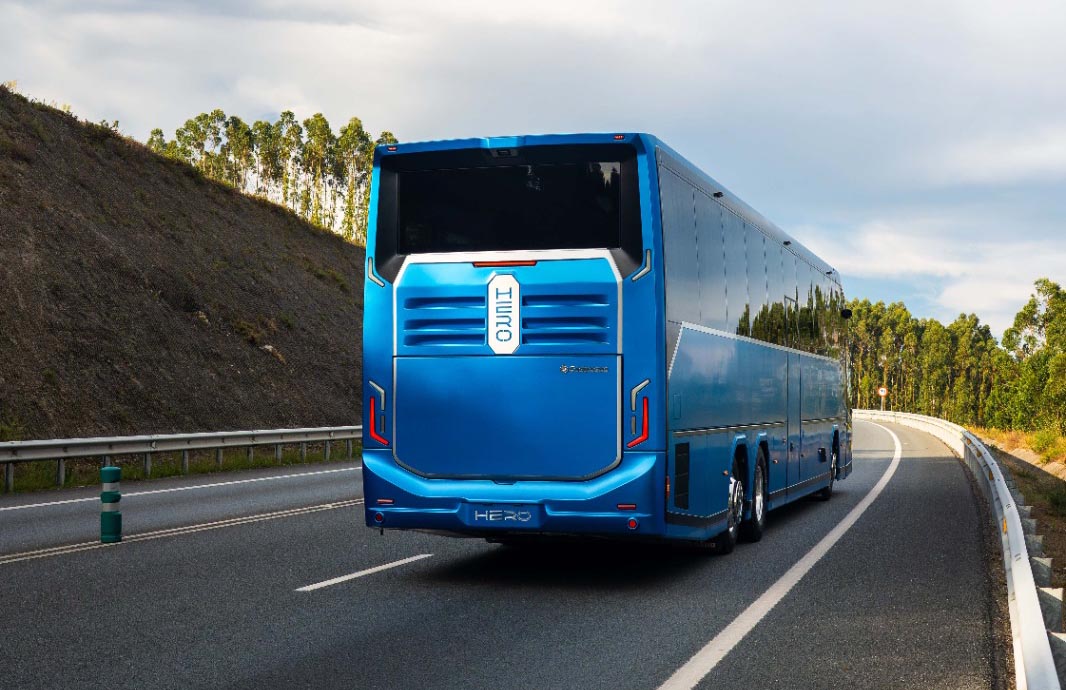
At Castrosua, we have been working for years on the design of buses with cutting-edge safety features, thus contributing to the reduction of road accidents and ensuring that this means of transport continues to be involved in fewer traffic accidents.
In our latest body models, we have reinforced both active safety (related to brakes, steering, acoustic warnings, wheels, mirrors, speedometer…) and passive safety (related to seat belts, seats, tanks, rear protection, flammability, structural resistance…). We have even anticipated state and European regulations.
A clear example of this is the Nelec. As we explained in our article “Nelec, Castrosua’s commitment to urban nature”, this body offers protection to the driver and passengers that goes beyond legal requirements.

The data provided annually by the DGT and the European Union’s reflections on road safety show that increased use of public transport is urgent to reduce accident rates. Let’s remember that this same data shows that buses are the safest means of transport for road travel: with only three fatalities recorded in 2019 and 2020, they represent just 0.2% of the total fatalities in traffic accidents in those years.
At Castrosua, we know that as body manufacturers, we play an important role. Therefore, we will continue to be committed to the goal of zero accidents, reinforcing safety in all our vehicles and collaborating with institutions to promote and disseminate quality road safety education.
This November 21, as always, our thoughts are with the victims of road traffic accidents. Achieving zero deaths and zero serious injuries on the roads is everyone’s responsibility. We will work to contribute our bit to the cause. Would anyone like to share their ideas on the matter? We’re reading!